
Find trusted neurodivergent coaches.
Search our public register of independently accredited practitioners.



How Accreditation Works
Earned against the Standards — never bought.
- 1
Apply
Submit your application with evidence of training and supervised practice.
- 2
Assessment
Your competence is assessed against the published Scope of Practice.
- 3
Certification
Pass, and you’re admitted to the Register with a recognised credential.
- 4
Public Listing
Your verified credential goes live for anyone to confirm.

Proficiency
Admission is earned by assessed competence against the Scope of Practice — never bought.

Ethical
Every member agrees in writing to a Code of Ethics and can be held to account.
Accountable
Standing is recorded on the public Register; lapses and breaches are noted.

Transparent
Credentials, specialisms and standing are open for anyone to verify.
Search by name or registration number to confirm a coach’s credential, specialism and current standing.
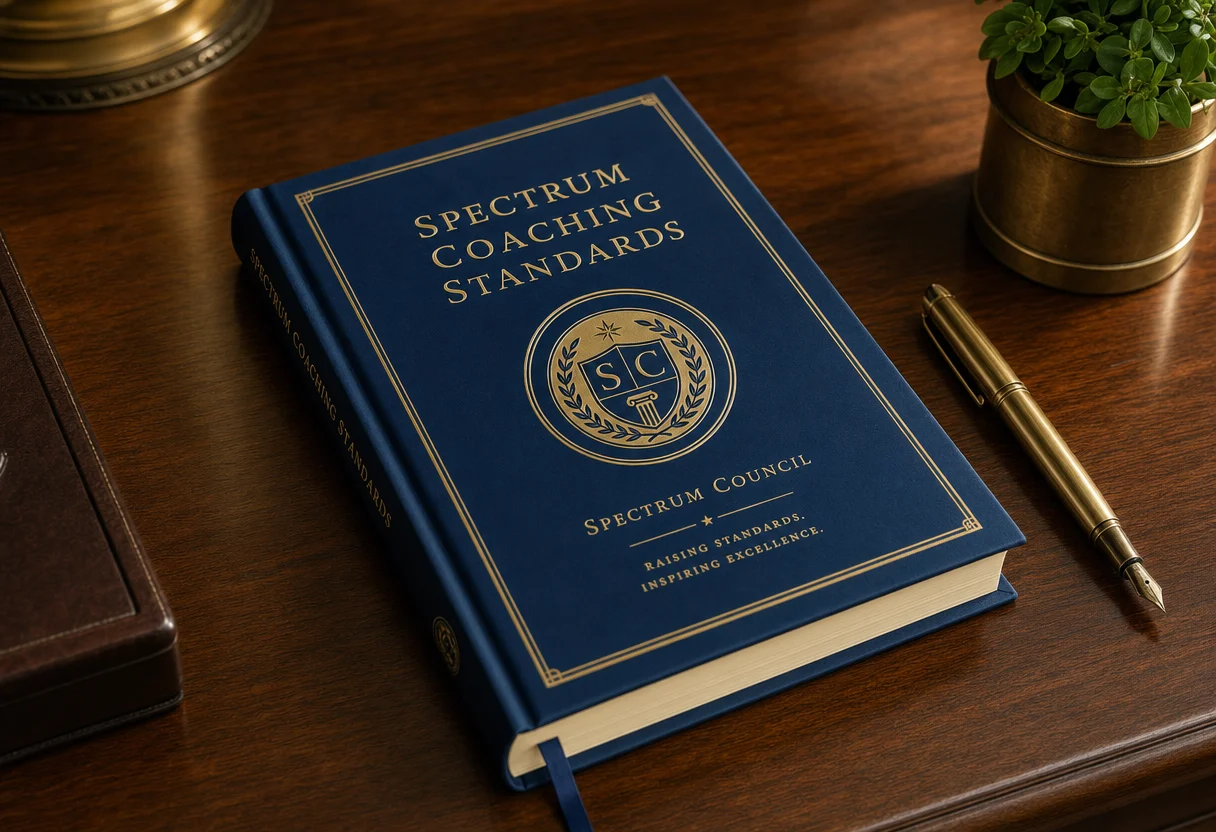
A credible standard, written down and held to.
- A published Scope of Practice that defines what accredited coaching is — and is not.
- A written Code of Ethics every member agrees to uphold.
- A clear complaints route, with standing reviewed and recorded.
- Versioned, dated documents anyone can read in full.
What recognition looks like
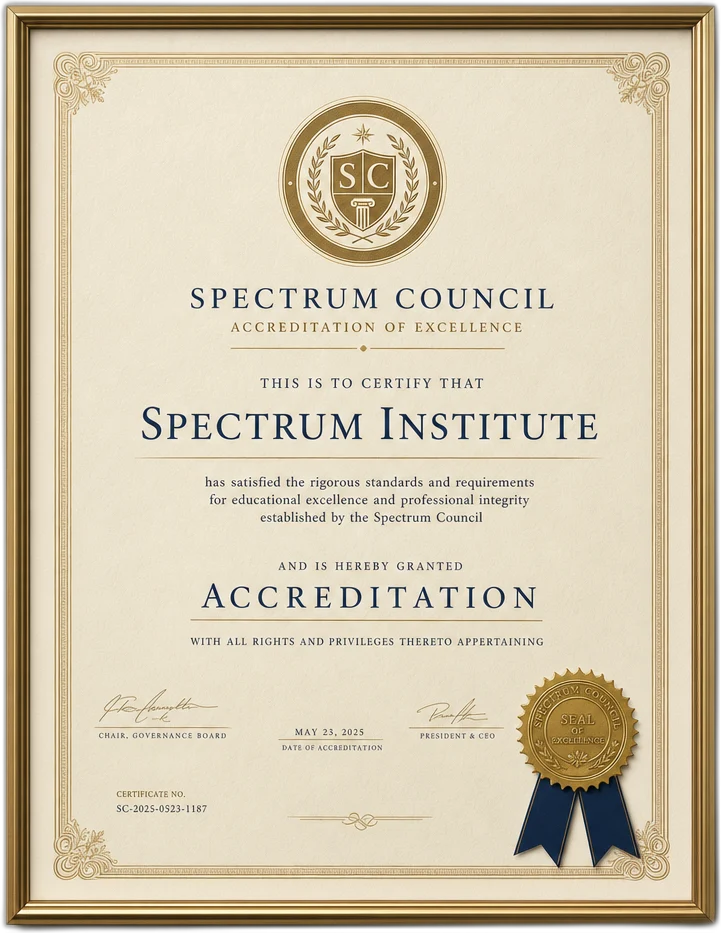
A certificate of accreditation
Issued on admission, carrying the Council seal and the member’s registration number.
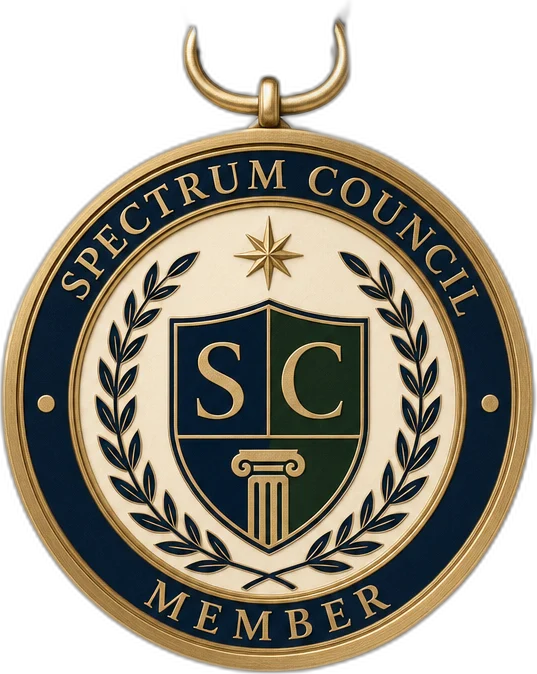
A members’ credential
Carried by practitioners in good standing — recognisable and verifiable.
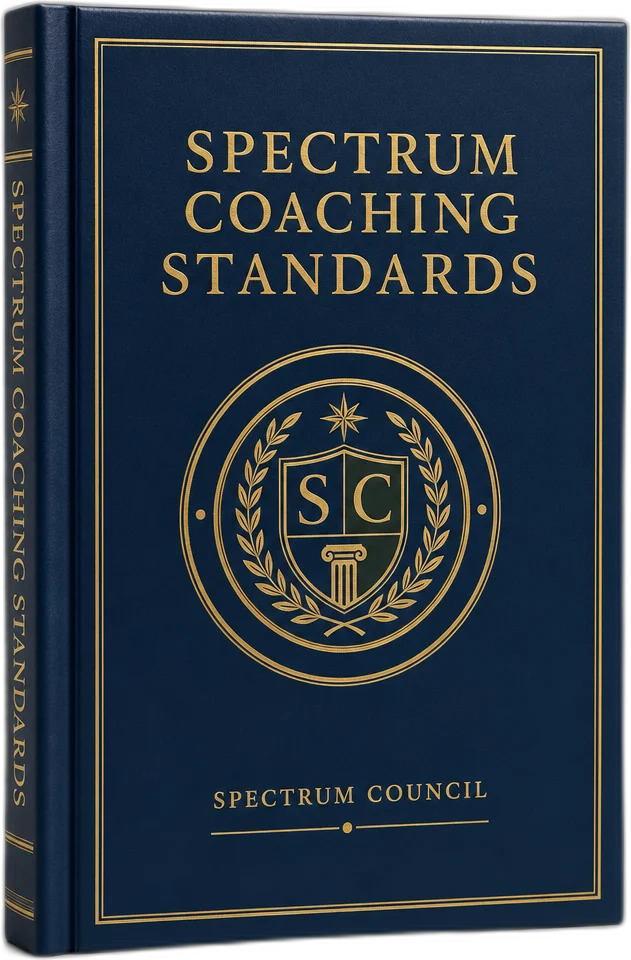
The published Standards
The Scope of Practice and Code of Ethics, versioned and open to read.
Everyone on the Register has demonstrated knowledge — and excellence
A Spectrum Council credential is never granted for finishing a course or paying a fee. Every practitioner has proven their competence against the published Standards, four ways:
Passed a written examination
A rigorous assessment across the full Scope of Practice. Entry requires a minimum score of 80% — there is no pass on attendance alone.
Demonstrated coaching skill
A full coaching session is submitted and assessed against a published competency rubric — knowledge has to be shown in practice, not just on paper.
Proven ethical practice
Each practitioner evidences understanding of confidentiality, scope of practice, safe referral and the Code of Ethics before admission.
Evidenced supervised practice & CPD
Admission requires documented supervised hours and continuing professional development — assessed once, recognised for life.
Every requirement above is set out in full in the published Standards — the Scope of Practice and Code of Ethics, versioned and open to read.
Built on the best reference material — not opinion
Our Standards and recognised curricula are grounded in peer-reviewed research: meta-analyses, randomised controlled trials and published syntheses. We cite our sources, review them as new evidence emerges, and version every change. A selection of the literature our Standards draw on:
The research supports the skill areas our practitioners are trained and assessed in. Standards are reviewed against current evidence and revised — every version dated and open to read.


“A Fellow of The Spectrum Council and member of the Standards Committee.”
Eleanor Whitfield · Dyslexia Coach & Council Fellow
Recognised training pathways
The Council is independent of any training provider. Graduates of recognised pathways are assessed against the published Standards before admission to the Register.
40-hour neurodivergent coaching certifications. Graduates earn Spectrum Council registration on passing the final exam and capstone.
Independent by design
A Standards Committee owns the Scope of Practice and Code of Ethics; a separate Registration function decides admissions and reviews standing. Those who set the standard do not sell the training — and no one can buy their way onto the Register.
“A credential is a relationship, not a certificate.”